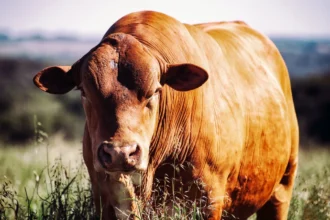
Bonsmara cattle are reshaping Brazil’s beef industry with superior genetics, sustainable practices, and high-value market potential.

Brazil is the world’s largest beef exporter, and its cattle industry is always looking for new ways to improve productivity and meat quality. In this search for efficiency, one breed has been attracting more and more attention: the Bonsmara.
Originally developed in South Africa, the Bonsmara combines tropical adaptability with high meat quality, making it a powerful option for Brazil’s production systems. Over the past two decades, the breed has gained ground among ranchers who see it as a smart alternative to traditional crossbreeding with Zebu cattle, especially Nelore.
From Africa to Brazil: Why Bonsmara Matters
The Bonsmara was created in the 1930s by Professor Jan Bonsma in South Africa. His goal was simple but ambitious: develop cattle that could survive heat, parasites, and poor forage conditions, while still producing high-quality beef.

To achieve this, he combined Afrikaner (a hardy African breed) with Shorthorn and Hereford (European breeds known for carcass quality). The result was a tropical taurine breed that balances productivity and resilience — qualities that fit perfectly in Brazil’s environment.
Why Brazilian Ranchers Are Paying Attention
Brazilian beef has long been dominated by Nelore, a Zebu breed extremely well adapted to the tropics. However, Nelore alone doesn’t always deliver the meat quality and early maturity required by today’s market. This is where Bonsmara steps in.
Key advantages for Brazil include:
- Early maturity (Precocidade): Bonsmara crosses reach slaughter weight faster than pure Zebu cattle, reducing production cycles.
- Climate adaptation: Despite its South African origin, Bonsmara thrives in Brazil’s tropical pastures, with natural resistance to heat and parasites.
- Hybrid vigor (Heterosis): Crosses with Nelore (Bonsmara x Nelore) deliver offspring that grow faster, are more fertile, and yield better carcasses.
- Feed efficiency: Better conversion of pasture and supplements into muscle means lower costs and higher margins.
- Meat quality: Bonsmara crosses improve tenderness and carcass yield, meeting both domestic premium markets and international demands.
- Strong maternal traits: Bonsmara cows produce plenty of milk and raise vigorous calves — a key advantage for extensive systems.
The Bonsmara x Nelore Cross: A Premium Beef Solution
One of the most promising applications of Bonsmara in Brazil is its crossbreeding with Nelore. This mix maintains the hardiness of Zebu cattle while adding the meat quality and productivity of Bonsmara.
The result? A tropical-adapted premium beef animal. This cross has been gaining attention not only in Brazil but also in export markets, where consumers are increasingly demanding tenderness and consistency.
Some ranches even go further, using Bonsmara genetics with Angus crosses, pushing marbling and meat quality to even higher levels.
Industry Support and Expansion in Brazil
The success of Bonsmara in Brazil is not just the result of its genetics, but also of strong industry organization. At the center of this effort is the Associação Brasileira dos Criadores de Bonsmara (ABCB Bonsmara), founded to promote, regulate, and support the breed’s growth in the country.
The ABCB acts as the official registry for Bonsmara cattle in Brazil, ensuring that breeding programs follow strict genetic and performance standards. It organizes technical events, field days, and genetic evaluation programs that allow ranchers to measure and compare results. Beyond promotion, the association works closely with universities, researchers, and international organizations to bring innovation and scientific backing to the breed’s development. This institutional support has been critical for giving Brazilian investors and ranchers the confidence to adopt Bonsmara on a larger scale.
Among the leading forces in this expansion is Fazenda Santa Silvéria, a pioneering ranch that played a decisive role in introducing the breed to Brazil. Located in São Paulo state, Santa Silvéria was one of the first operations to invest heavily in Bonsmara genetics, establishing itself as a reference point for the breed. The ranch has worked not only on purebred Bonsmara herds but also on strategic crossbreeding programs, demonstrating the value of Bonsmara x Nelore crosses for both productivity and premium beef markets.
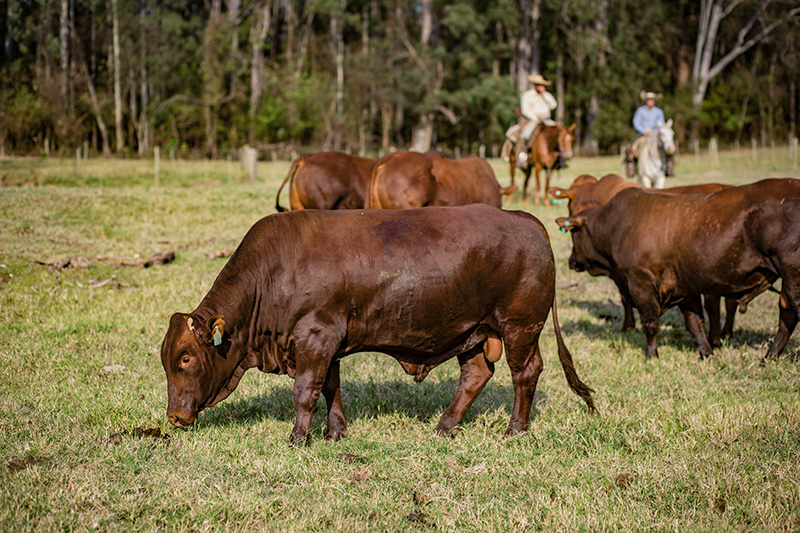
Santa Silvéria also became a key player in disseminating the breed by supplying genetics to other ranches, participating in national auctions, and working alongside the ABCB to build awareness of the Bonsmara’s potential. For many Brazilian producers, the success of Santa Silvéria provided the practical evidence they needed: Bonsmara was not just a theory, but a real solution that could improve margins and meat quality in Brazil’s tough tropical systems.
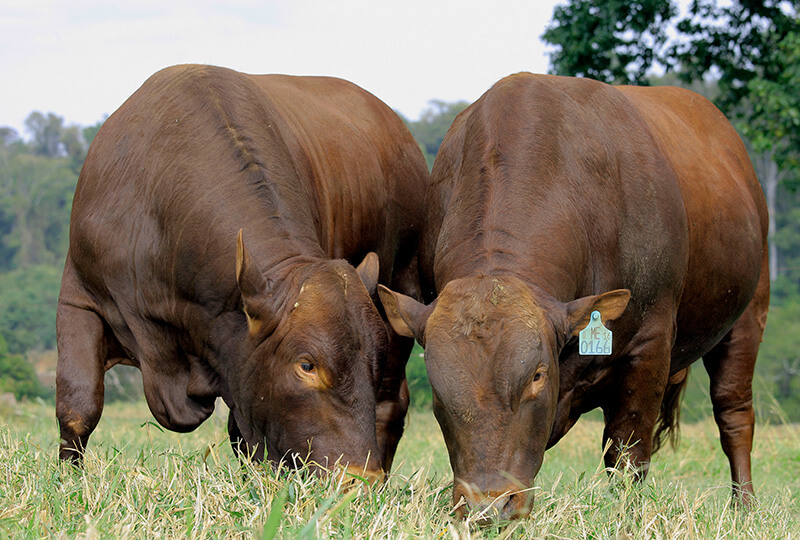
Today, the collaboration between ABCB Bonsmara, pioneering ranches like Santa Silvéria, and new adopters across the country is fueling steady growth of the breed. While still smaller in numbers compared to traditional Zebu cattle, Bonsmara is carving out a strong niche in the premium beef sector, positioning itself as a breed of the future for Brazilian cattle production.
A Glimpse into the Future of Brazilian Beef
Brazilian beef production is evolving fast, with increasing investments in genetics, sustainability, and meat quality. The Bonsmara is part of this transformation. By combining the resilience of tropical cattle with the productivity of a scientifically developed taurine breed, Bonsmara is helping shape the next generation of Brazilian beef.
For international investors, researchers, and industry observers, the Bonsmara story in Brazil is more than just about one breed. It represents the country’s broader effort to balance efficiency, adaptability, and premium meat quality — a crucial combination for maintaining its position as a global beef leader.